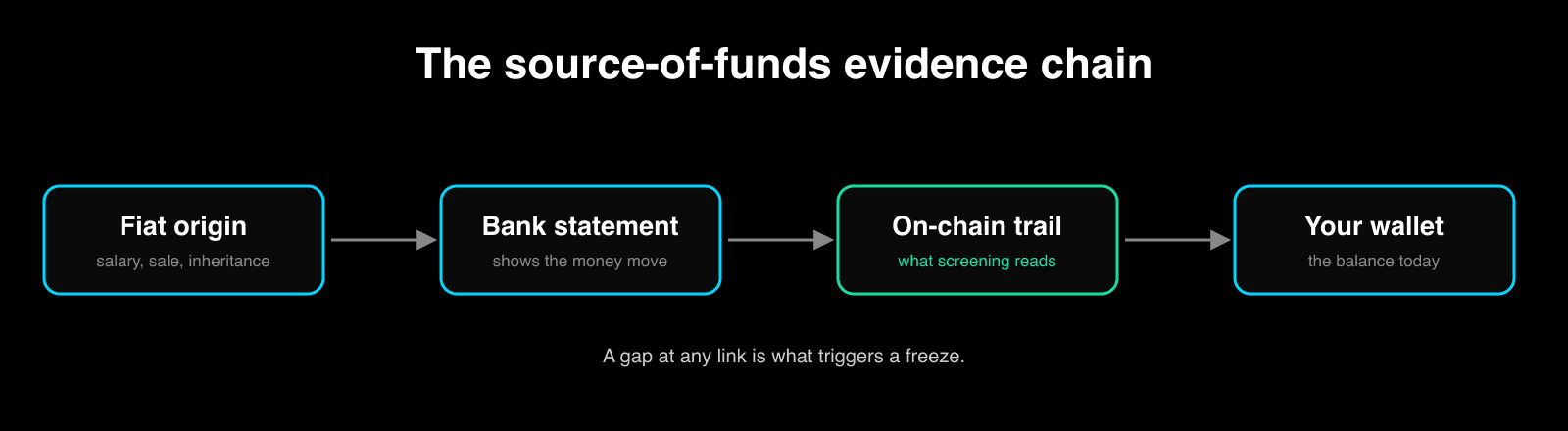
TL;DR: A source of funds letter is a short written explanation, backed by documents, of where the money behind your crypto came from. Exchanges and banks ask for one before large withdrawals or fiat off-ramps. The letter is judged against your paper trail and your on-chain history, so the two have to line up - screen your own wallet first to see what the reviewer sees.
Sooner or later a centralized exchange, a bank, or a payment provider asks the same question: where did this money come from? You answer with a source of funds (SoF) letter and supporting evidence. Get it right and your withdrawal clears; leave a gap and the funds sit frozen pending review. Here is what the letter needs to contain, which documents actually count, and how to check the on-chain half of the story before you hit send.
When does a crypto exchange ask for a source of funds letter?
A request is not an accusation - it is a routine customer due diligence step. Exchanges are legally required to verify the origin of funds to comply with anti-money-laundering rules. Kraken puts it plainly: it follows "strict laws to prevent money laundering and illegal activities," and a request "might simply be required based on the country you live in, or because of your current situation."
The usual triggers are:
- A large deposit, withdrawal, or off-ramp to a bank account.
- Account activity that does not match your stated profile (a student moving six figures, for example).
- A deposit that arrived from a flagged or high-risk source address.
- A periodic re-verification, often tied to your jurisdiction's regulations.
What should a source of funds letter include?
Keep it short, factual, and verifiable. A reviewer is matching your words against documents and on-chain data, not reading an essay. A workable letter covers:
- Who you are - full legal name, account email, and the wallet or account in question.
- What you are submitting and why - reference the specific deposit, withdrawal, or request you are responding to.
- Where the money originated - the underlying fiat source (salary, business income, sale of property, inheritance, savings) and how you converted it to crypto.
- Dates and amounts - enough to tie the explanation to the transactions, without burying it in detail.
- A declaration of legality - a plain statement that the funds were lawfully obtained.
Two to four sentences of narrative is usually enough. The documents do the heavy lifting.
Which documents count as proof of source of funds?
Reviewers distinguish source of funds (where this specific money came from) from source of wealth (how you built your overall net worth). Most requests want both pieces to agree. Crypto.com states that proof "should be a document that displays from where the funds used to fund your Crypto.com account have originated," and pairs almost every category with a bank statement.
Commonly accepted evidence, drawn from exchange guidance:
- Salary - a recent payslip or tax statement plus a bank statement showing the deposits.
- Sale of property - a contract of sale, title deed, or letter from a lawyer, plus the bank statement showing the proceeds.
- Savings - bank statements covering at least three months that show the balance.
- Inheritance - a copy of the will or a letter from the executor, plus the bank statement showing the transfer.
- Crypto income - mining payout statements, or external exchange statements showing your name, wallet address, and balances.
The pattern is consistent: an origin document and a bank statement that ties it to real money movement. A single screenshot rarely satisfies a reviewer.