TL;DR - OKX's CEO confirmed on September 2, 2026 that deposits tied to gambling platforms can trigger an AML review lasting 15 days or longer, and the only way out is proving where the crypto actually came from.
On September 2, 2026, OKX founder Star Xu answered a user's complaint about a stuck sports-betting deposit with a number: 15 days, sometimes more. The review isn't a glitch. It's the exchange's screening system doing exactly what it was built to do.
Deposits don't get judged on amount. They get judged on where they've been. A gambling platform is one of a handful of sources OKX now treats as high-risk by default, and once a deposit lands in that bucket, the clock starts before you even notice.
What Actually Triggered the Hold
Xu's reply named two specific red flags, not a vague "high-risk activity" catchall. The first: "guaranteed" escrow deals arranged through Telegram groups. The second: a network he called Huiwang, the pinyin name for Huione Guarantee - later rebranded Haowang Guarantee after its original brand got too hot to use.
That marketplace moved more than $27 billion before Telegram banned the accounts running it in 2025. The U.S. Treasury had already proposed designating its parent, Huione Group, a primary money laundering concern, pointing to over $4 billion in flagged transactions between August 2021 and January 2025, including $37 million tied to North Korean cyberheists and roughly $300 million from pig-butchering scams targeting U.S. victims.
Deposit through either channel, and your address inherits that exposure. Not because you laundered anything. Because three or four hops back, someone else did.
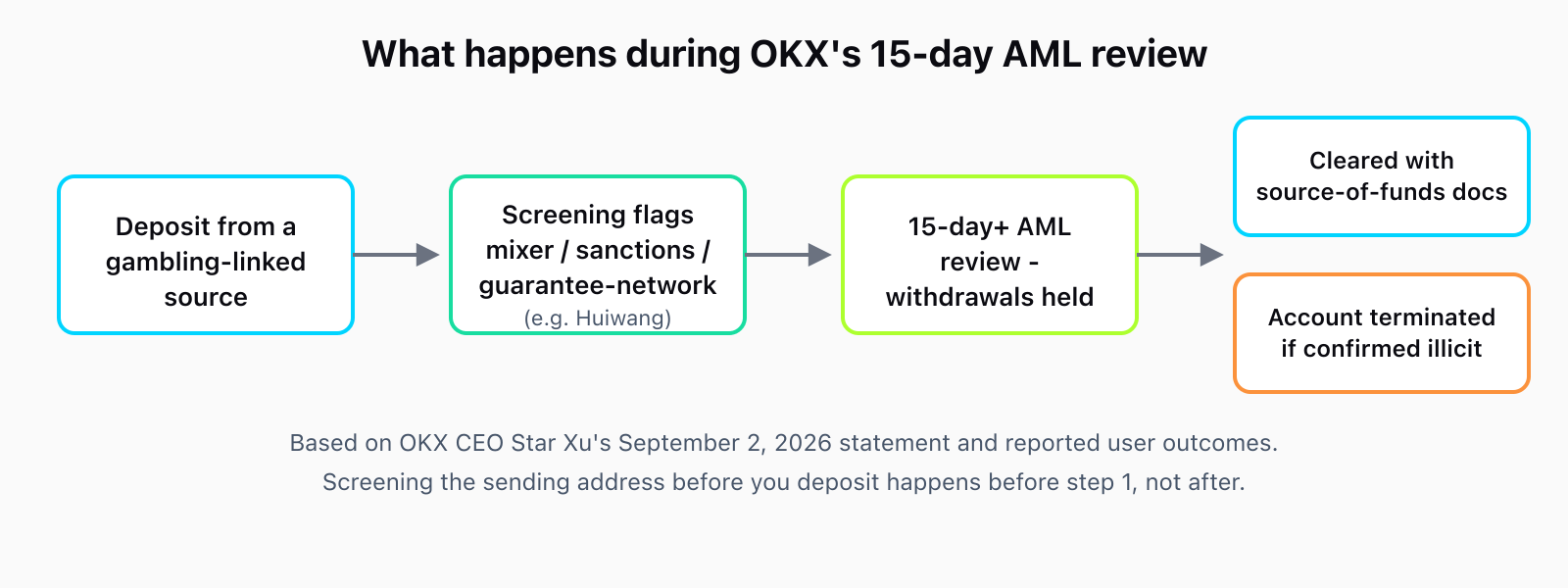
OKX already ran lighter checks before this. A 24-hour automatic hold kicks in after a security setting change, and P2P order cancellations carry their own short timers. The 15-day review is a different tier entirely - it's a deep look at fund origin, not a routine safety pause.
Why Does a Gambling Deposit Count as High-Risk?
Sports betting and casino platforms sit at a junction banks have policed for decades, and crypto exchanges are catching up fast. Funds routed through gambling sites are hard to trace to a clean origin, and some of the platforms OKX is targeting aren't licensed operators at all - they're fronts for the same guarantee-market infrastructure Treasury just moved against.
Screen first. Flag later costs more.
What a screening system actually checks is the cluster behind the address: does it touch a mixer, a sanctioned wallet, a known scam operation, a darknet-linked service. A gambling site that routes payouts through an unlicensed guarantee network lights up several of those at once. The address format never changes. What changes is what that address touched on its way to you.