TL;DR - Clipper malware sits on an infected device and swaps a copied wallet address for an attacker's the instant you paste it, so always check the full string against the source and screen the destination before you hit send.
Most crypto theft needs you to make a mistake. Clipper malware needs you to do nothing at all. It sits on your device, watches the clipboard, and swaps in its own address the moment you copy one. The amount stays right. The network stays right. Only the destination changes, and your wallet has no way to flag it.
What is clipper malware?
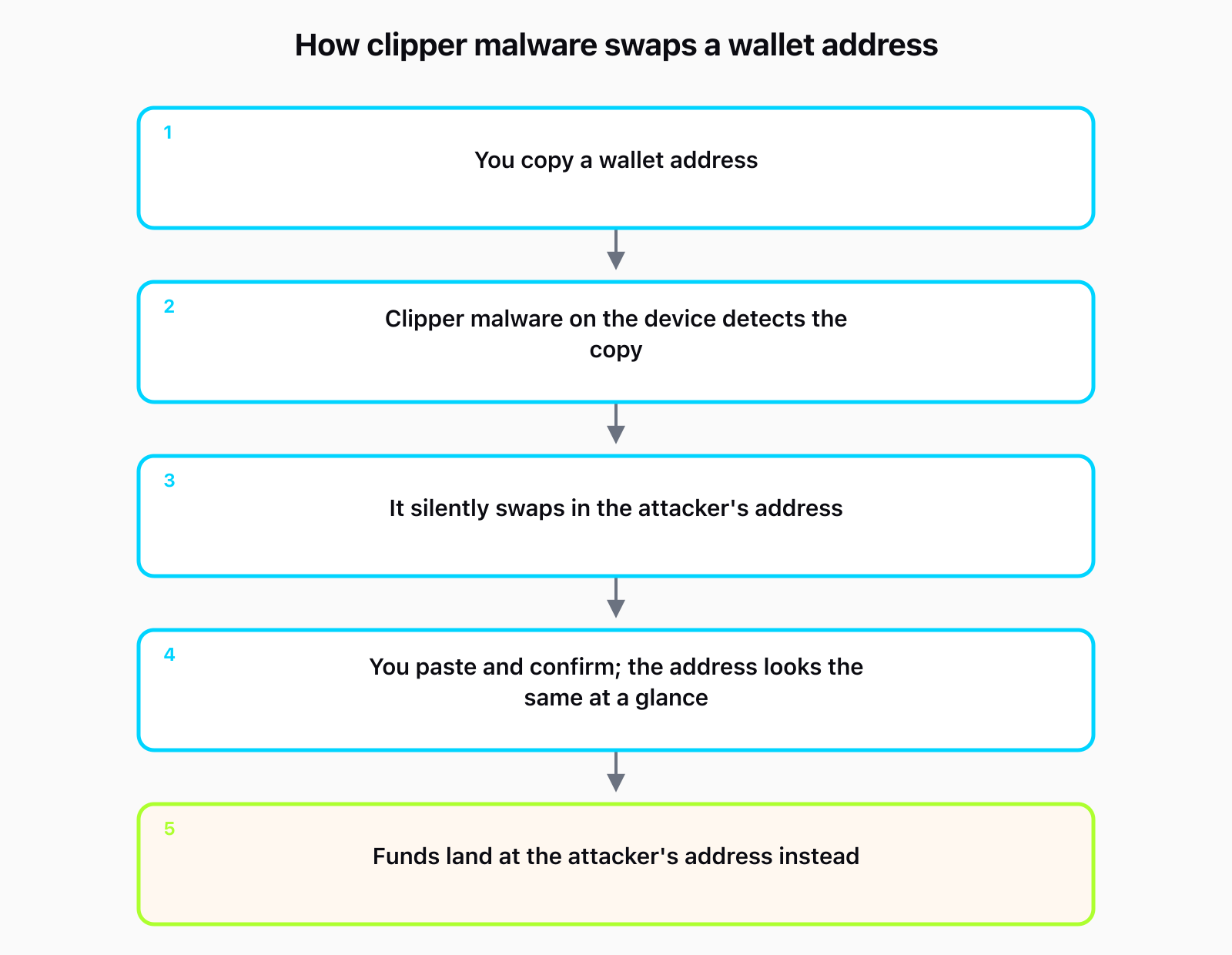
Clipper malware, also called a clipboard hijacker, is a small program that watches your system clipboard for anything shaped like a crypto address. When it spots one, it swaps in an address the attacker controls before you paste. You won't feel it happen. The technique isn't new. Security researchers tracked the first clipboard-swapping Bitcoin malware back in 2017, and it hasn't gone away.
Microsoft's threat intelligence team published an advisory on June 17, 2026 describing a Windows clipper campaign, active since that February, that spreads through malicious shortcut files on USB drives and uses Tor for its command-and-control traffic. The malware checks clipboard contents against the address formats for Bitcoin, Ethereum and other chains, then overwrites a match in milliseconds. Nothing else about your transaction changes.
The swap happens between copy and paste, so the amount and network stay correct on screen and only the destination changes.
How does clipper malware get onto your device?
Most clippers ride in on something else you installed on purpose. Microsoft's USB campaign spreads through .lnk shortcut files left on removable drives, so plugging in one infected stick is enough to start the chain. A separate 2026 campaign, written in Rust and able to run on both Windows and macOS, spread through fake review networks built to make a malicious download look trustworthy.
Browser extensions and cracked wallet apps are the other common path. A user on Cardano's own community forum reported ADA stolen after installing a fake version of the Yoroi wallet extension, and a thread on Brave's community forum describes a pasted wallet address changing mid-transaction on an infected machine. Neither case needed a phishing link or a fake login page. The malware just waited.
How big is the clipper malware problem in 2026?
CyberArk's research into a campaign called MassJacker ties at least 778,531 attacker-controlled addresses to the operation, each one a drop point for stolen crypto. Cointelegraph separately reported a case where a clipper swapped the destination on a single transfer to steal 13 BTC. Neither total has a real upper bound. Most clipper theft never gets reported, because the victim assumes they just mistyped the address.
Plastron's own labeled dataset carries more than 100,000 addresses flagged from real scam, fraud and exploit activity, and 56,813 of those are tagged for scam behavior specifically, the exact category a clipper's drop address falls into once someone reports it. A destination a clipper swapped in today can turn up as a known scam address within days. That's exactly what screening catches.
How do you catch a clipboard hijack before you send?
Compare the full address, not just the first and last few characters, every time you paste one into a send field. A clipper only needs you to glance. The same discipline is covered in checking an address before you send a payment, and it applies whether the wrong address came from malware or from the sender.
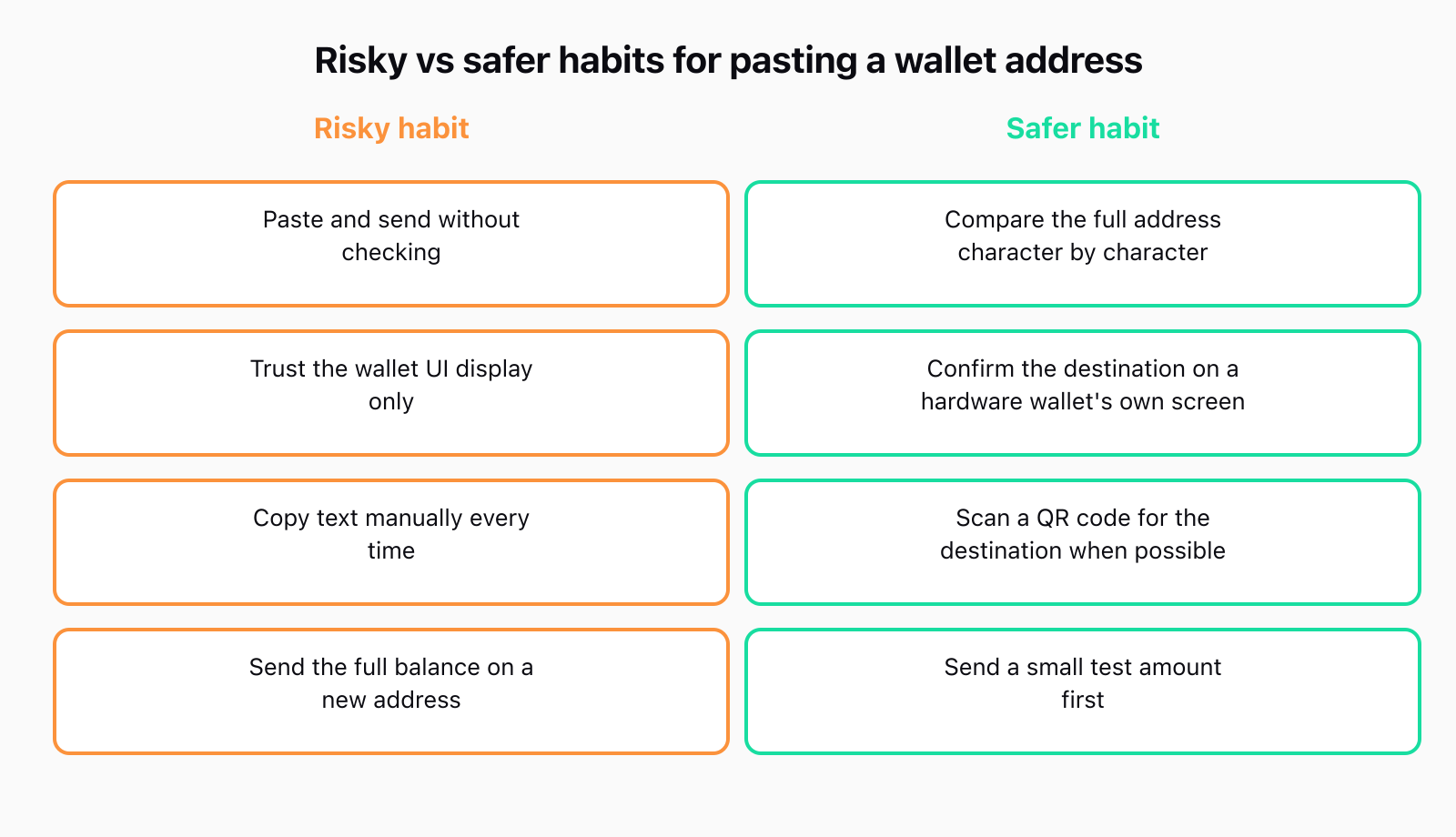
Paste the address into a separate text field first and read every character against the source, not just the ends.
Use a hardware wallet that shows the destination on its own trusted screen, since desktop malware can't alter that display.
Scan a QR code for the destination instead of copying text, when the option exists.
Send a small test amount before moving a full balance to any address you haven't paid before.
A clipper swap only works if you don't look; each safer habit on the right closes that gap.
None of that replaces checking the string by eye against a source like Etherscan before every send. But if the swapped-in address has already drained other victims, screening would show it. Screen the destination with Plastron for sanctions, mixer and stolen-funds exposure before you send, on top of the manual check, not instead of it.
What do you do if a clipper already swapped your address?
Nothing reverses a confirmed transfer. Treat the device as compromised the moment you spot a swap, not after you've sent more funds from it.
Move whatever's left to a new wallet generated on a clean device, and never reuse a seed phrase that touched the infected machine. Report the destination address to the exchange it passed through, if one was involved, and through the block explorer's abuse-reporting form. Address poisoning is a related scam that works the same blind spot from a different angle, planting a lookalike entry in your transaction history instead of touching your clipboard, so your habits need to cover both.
FAQ
Can antivirus software catch clipper malware?
Some can, but clipper variants rotate fast enough that signature-based antivirus often misses new builds for weeks. The Rust-based campaign that ran on both Windows and macOS during 2026 was built specifically to slip past common detection. Treat antivirus as one layer, not the only one.
Does a hardware wallet make clipper malware harmless?
Mostly, because the device shows the real destination address on its own screen before you approve the transaction. A hardware wallet doesn't stop the malware from running, but it stops the swapped address from reaching your signature unnoticed.
Is clipper malware the same as address poisoning?
No. Address poisoning plants a lookalike entry in your transaction history so you copy the wrong address yourself, while clipper malware changes a correctly copied address the instant you paste it. Both end with funds going to an attacker, but the point of failure is different.
Can a clipper swap an address on mobile?
Yes. A mobile clipboard is just as readable by a malicious app with clipboard permissions, and several 2026 reports describe Android clippers bundled inside modified wallet apps distributed outside official app stores.
Disclaimer: This article is for educational and informational purposes only and is not legal, financial, tax, or compliance advice. Crypto carries risk; you act on this information at your own risk. Always do your own research and consult a qualified professional before making decisions. Views are the author's own and do not constitute financial, legal, or investment advice.
About Plastron
Plastron is a free, non-custodial wallet screening tool. It checks Ethereum and six EVM chains for AML and KYT risk — sanctions exposure, mixer contact, and stolen-funds proximity — and returns a risk report in seconds. It reads public on-chain data only: it never takes custody of funds and never asks for private keys.