TL;DR - A P2P buyer who pays you with stolen or scam-linked money can get your bank account frozen, because the bank traces that dirty deposit back to you - even though you only sold crypto in good faith.
Selling crypto peer-to-peer feels safe when the platform holds the coins in escrow. The risk most sellers miss sits on the other leg of the trade: the cash. The buyer pays you by bank transfer, and if that money came from fraud, the victim's bank can follow it straight into your account and freeze it. The escrow protected your crypto. Nothing protected your bank balance. This guide explains why that happens, how to tell when a freeze is tied to a trade, and what actually gets the account reopened. One cheap guard up front: check the buyer's wallet address before you release, the same screen a Binance wallet check runs on a deposit.
Why does a P2P crypto trade freeze your bank account?
A peer-to-peer sale has two legs. You release crypto from escrow, and the buyer sends fiat to your bank. The platform guarantees the first leg. It has no control over where the buyer's money came from.
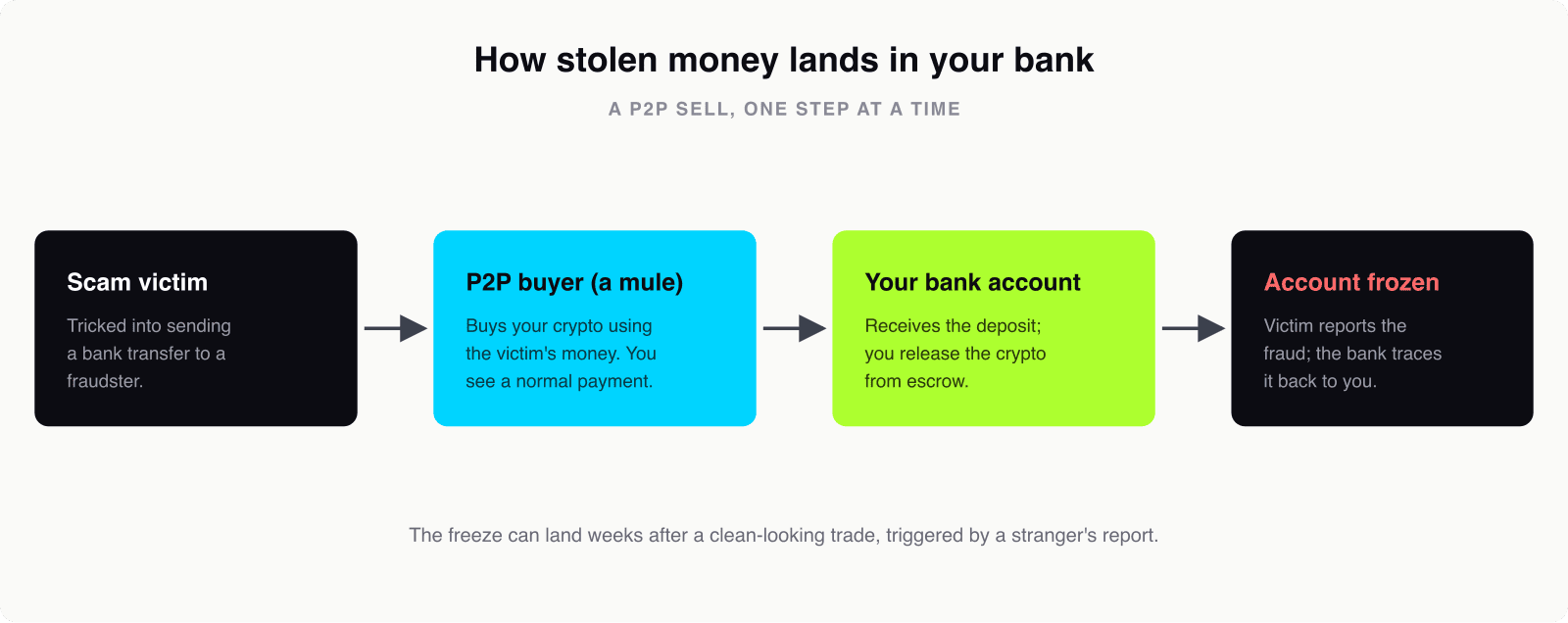
Fraud rings use P2P desks to launder stolen funds. A scammer tricks a victim into sending a bank transfer, then uses that same victim's money to buy crypto from you. You see a normal incoming payment and release your coins. Days or weeks later the victim reports the fraud to their own bank. That bank traces the stolen transfer to its destination, your account, and asks your bank to freeze it while the case is investigated. To the banking system you are the person holding the proceeds, regardless of intent.
This is why a freeze can land long after a clean-looking trade. The trigger is not your behaviour. It is a fraud report filed by a stranger whose money passed through your account on its way to you.
Escrow protects the crypto you send; it has no power over where the buyer's cash came from.
How do you know the freeze came from a P2P trade?
The signs are usually sudden. You try to spend or withdraw and the funds are blocked, or the whole account is suspended without warning. The bank may call or send a secure message asking you to explain a specific incoming payment, often naming the date and amount.
Match that amount against your trade history. If it lines up with a P2P sale, the freeze almost certainly traces to the buyer's payment. Banks rarely volunteer the full reason early, because an active fraud investigation limits what they can disclose. A request to document the source of one named deposit is the strongest clue that a tainted inbound transfer is the cause.
How do you get the frozen account unfrozen?
Treat it as a documentation problem, not an argument. The bank needs to see that you received the money for a legitimate sale and had no part in the fraud. Gather the evidence before you respond.
Pull the platform order: the trade ID, the timestamp, the amount, and the escrow release record showing you sent crypto in exchange. Save the in-app chat with the buyer. Note the counterparty's verified account name, since regulated P2P platforms run identity checks you can reference. If your bank asks in writing, reply in writing with these records attached. A clear source of funds explanation that ties the deposit to a documented trade is what moves the case forward.
If the amount is large or the hold runs for weeks, get legal advice early. In many cases the freeze lifts once the bank confirms you were a downstream seller rather than the originator of the fraud, but the timeline depends on the police report attached to the victim's complaint, not on you. Cooperate, keep copies of everything, and avoid moving other funds around in a way that looks evasive.
How can you avoid a P2P bank freeze before it happens?
You cannot fully control who pays you, but you can lower the odds and build a record that clears you fast. Three habits do most of the work.
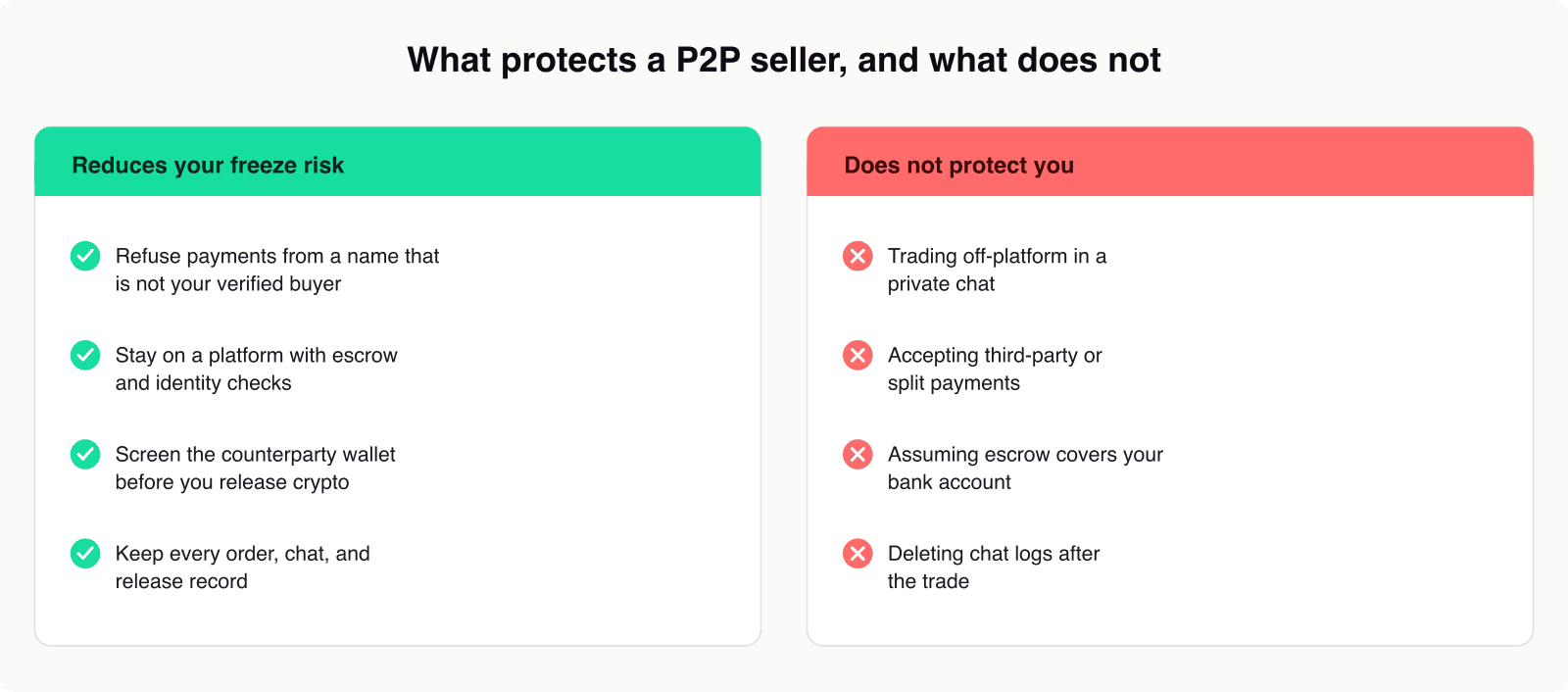
First, refuse third-party payments. If the bank transfer arrives from a name that does not match your verified buyer, stop and raise a dispute before releasing crypto. Money sent by someone other than the trader is the clearest sign of a mule transaction. Second, stay on a platform with escrow and identity checks, and never move the deal to a private off-platform chat. Third, keep every record, orders, chats, and release confirmations, so a source-of-funds request takes minutes, not days.
The habits that lower freeze risk are also the ones that document your innocence fastest.
You can also vet the other side of the trade. Before dealing with a counterparty, you can look their crypto wallet up on a block explorer such as Etherscan and read its history by hand, though that is slow and only covers one chain. Screen the counterparty's address with Plastron to see sanctions, mixer, and stolen-funds exposure across Ethereum and six other chains in seconds, before you release anything. A wallet that already touches flagged or sanctioned funds is a reason to walk away, and the same pre-trade screening discipline that protects an OTC desk protects a casual P2P seller too.
FAQ
Can my bank freeze my account over a crypto trade I did nothing wrong in?
Yes. If the buyer paid you with stolen money, the victim's fraud report can lead your bank to freeze the deposit while it investigates, regardless of your intent. You clear it by documenting that you received the funds for a legitimate, recorded sale.
How long does a P2P-related bank freeze last?
It varies from a few days to several weeks. The timeline depends on the police report and the investigating bank, not on you. Responding quickly with full trade records is the fastest way to shorten it.
Does the exchange escrow protect me from a bank freeze?
No. Escrow only protects the crypto leg of the trade. It guarantees the coins are released fairly, but it has no power over the buyer's bank payment or what your bank does with a flagged deposit.
How can I check a P2P counterparty before I trade?
Read their wallet's history on a block explorer, or run the address through a multi-chain screening tool to see sanctions, mixer, and stolen-funds exposure at once. A wallet linked to flagged funds is a reason to decline the trade.
Disclaimer: This article is for educational and informational purposes only and is not legal, financial, tax, or compliance advice. Crypto carries risk; you act on this information at your own risk. Always do your own research and consult a qualified professional before making decisions. Views are the author's own and do not constitute financial, legal, or investment advice.
About Plastron
Plastron is a free, non-custodial wallet screening tool. It checks Ethereum and six EVM chains for AML and KYT risk — sanctions exposure, mixer contact, and stolen-funds proximity — and returns a risk report in seconds. It reads public on-chain data only: it never takes custody of funds and never asks for private keys.